II. Sādhana Pāda · Avoiding suffering to come (2.15–2.17)
2.17 · The Moon in the Water
The cause of what can be avoided is the joining of seer and seen.
Word by word
- draṣṭṛ
- the seer
- dṛśyayoḥ
- and the seen
- saṃyogaḥ
- joining, conjunction
- heya-hetuḥ
- the cause of what is to be avoided
Where it fits
The second part of the frame: the cause of what is to be avoided. Vyāsa marks the step (Woods p. 140). The cause is the joining of seer and seen. The following sūtras explain each term: the seen (2.18–2.19), the seer (2.20), why they meet (2.21–2.23) and what binds them (2.24).
Reading
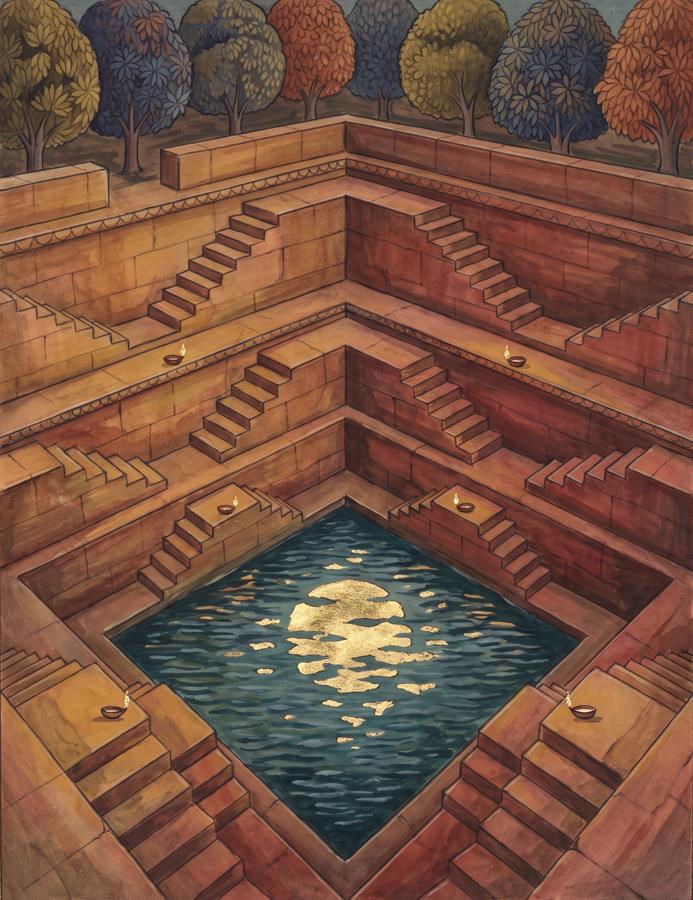
The cause of avoidable suffering is the joining of seer and seen: awareness becoming so entangled with what it witnesses that it seems to suffer what it sees. Seeing itself is not the problem; the identification is. When the water trembles, the reflected moon seems to tremble, though the moon in the sky is still.
Vyāsa
“For example: the sole of the foot can be pierced; the thorn can pierce; and the way to avoid it is either not to tread on the thorn, or to tread on it with a shoe in between.”
Vyāsa's Yoga-bhāṣya, the oldest commentary. New translation from the Sanskrit, with reference to Woods (1914), p. 140.
Practice
Watch a film or a video for five minutes and catch the moments when you are 'in' it. Then try the same with your own mood: catch the moment you become it.
A question to sit with
What are you so close to that you have merged with it?
Key ideas
puruṣa (the seer, the self), prakṛti (nature, the seen), duḥkha (suffering)