II. Sādhana Pāda · Seer and seen (2.18–2.25)
2.18 · The Three Colours
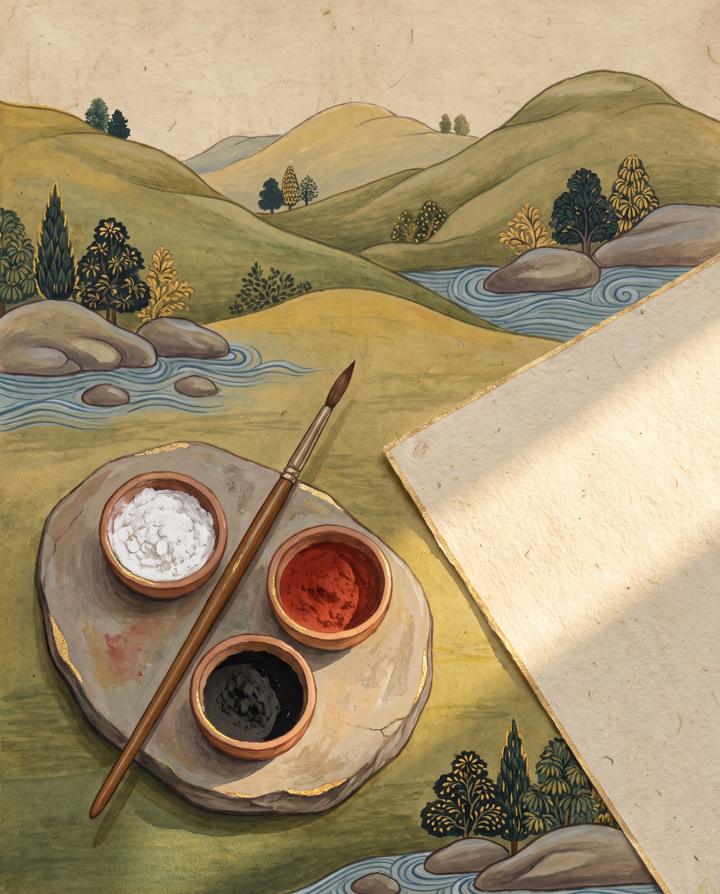
The seen has the nature of light, activity and stability; it is made of the elements and the senses, and exists for experience and for freedom.
Word by word
- prakāśa
- light, clarity (sattva)
- kriyā
- activity (rajas)
- sthiti
- stability, inertia (tamas)
- śīlam
- having the nature of
- bhūta-indriya-ātmakam
- made of the elements and the senses
- bhoga
- experience
- apavarga
- freedom, release
- artham
- for the sake of
- dṛśyam
- the seen
Where it fits
Having named seer and seen as the pair whose joining causes pain (2.17), the text defines the seen first. Vyāsa: the nature of the seen is now stated (Woods p. 144). Its traits are the three guṇas, and its purpose, experience and freedom, anticipates 2.21. 2.19 maps its levels.
Reading
Everything that can be seen, whether world, body or mind, has three traits: light, activity and stability. These are the guṇas, sattva, rajas and tamas: lightness (or clarity), activity, inertia. The Śvetāśvatara Upaniṣad (4.5) speaks of an unborn one, red, white and black, later read as these three. The seen is built from elements and senses, and it has a purpose: experience, and freedom. Nature is not the enemy in this text. It exists to give the seer both a life and a way out.
Vyāsa
“Victory or defeat happens among the soldiers, yet it is credited to their lord, since he is the one who experiences its result. In the same way, bondage and liberation, which exist only in the intellect, are credited to the self.”
Vyāsa's Yoga-bhāṣya, the oldest commentary. New translation from the Sanskrit, with reference to Woods (1914), p. 145.
Practice
Watch for the three qualities today. Note one moment of clarity (light), one of drive (activity) and one of heaviness (stability). Which one does the day need more of?
A question to sit with
Is today asking for more light, more movement or more stillness?
Key ideas
prakṛti (nature, the seen), guṇa (strands of nature), puruṣa (the seer, the self)