II. Sādhana Pāda · Seer and seen (2.18–2.25)
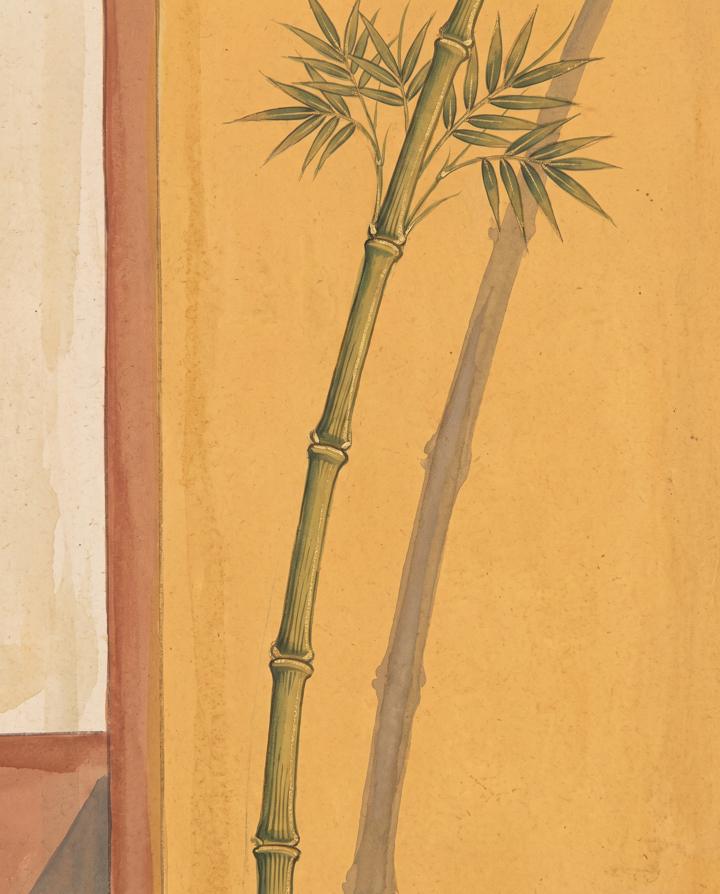
2.19 · The Joints of the Cane
The stages of the guṇas are the specific, the non-specific, the merely marked and the unmarked.
Word by word
- viśeṣa
- the specific: gross elements, the ten senses and the mind
- aviśeṣa
- the non-specific: subtle elements, the sense of I
- liṅga-mātra
- the merely marked: the first stirring of intellect
- aliṅgāni
- the unmarked: unmanifest nature
- guṇa-parvāṇi
- the stages of the guṇas; literally, their joints
Where it fits
Vyāsa says this sūtra is begun to fix the distinct forms of the guṇas, which make up the seen (Woods p. 148). It extends 2.18 into a Sāṃkhya-style map of nature, from its unmanifest source to the solid world and the senses. With the seen described, the text turns to the seer (2.20).
Reading
The guṇas unfold in four stages. Parvan means a joint, like the knots along a stalk of cane. From the unmarked, nature before it shows itself, comes the merely marked, the first stirring of intelligence. Then come the non-specific, the subtle elements and the sense of 'I', and finally the specific, the solid world and its senses. Meditation travels this map in reverse, from the surface toward the source.
Vyāsa
“But the guṇas … neither perish nor come into being. Only because of their manifest forms … do they seem to come into being and pass away. As when we say, 'Devadatta is growing poor.' Why? 'Because his cows are dying.'”
Vyāsa's Yoga-bhāṣya, the oldest commentary. New translation from the Sanskrit, with reference to Woods (1914), p. 150.
Practice
Sit with one object, such as a stone. First feel it as a solid thing. Then as qualities: colour, weight, coolness. Then as an experience happening in you. Then notice that even the subtlest layer is still something seen.
A question to sit with
How far beneath the surface can you look today?