II. Sādhana Pāda · Seer and seen (2.18–2.25)
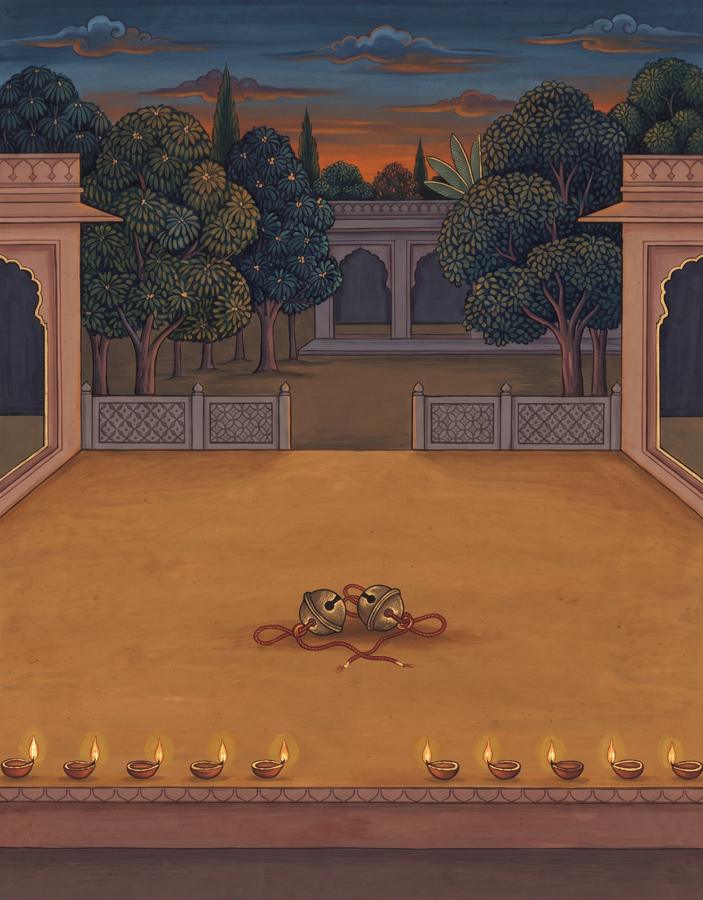
2.21 · The Dancer
The very nature of the seen is only for the seer's sake.
Word by word
- tat-arthaḥ
- for its sake (the seer's)
- eva
- only
- dṛśyasya
- of the seen
- ātmā
- essence, very nature
Where it fits
With seen (2.18) and seer (2.20) defined, the text relates them: the seen exists only for the seer's sake. Vyāsa draws the consequence. Once experience and freedom are achieved, the seer no longer sees it, yet it does not cease to exist (Woods p. 157). 2.22 explains why it does not.
Reading
The whole seen world exists for the sake of the seer: not as its property but as its purpose. Nature performs the show of experience so that the seer can live it and finally recognise itself. In Sāṃkhya, the philosophy Patañjali builds on, nature is compared to a dancer who performs and then withdraws once she has been fully seen (Sāṃkhya Kārikā 59).
Vyāsa
“… the very being of the seen exists only for the seer's sake; that is, its own nature does. … Once it has served its purpose of experience and freedom, the self no longer sees it. So by losing its own nature it reaches its end; yet it does not cease to exist.”
Vyāsa's Yoga-bhāṣya, the oldest commentary. New translation from the Sanskrit, with reference to Woods (1914), p. 157.
Practice
Take one experience from today, pleasant or not, and ask: 'What is this showing me?' Write the answer in a sentence.
A question to sit with
What is this experience for?