II. Sādhana Pāda · Seer and seen (2.18–2.25)
2.22 · Lamps in Other Doorways
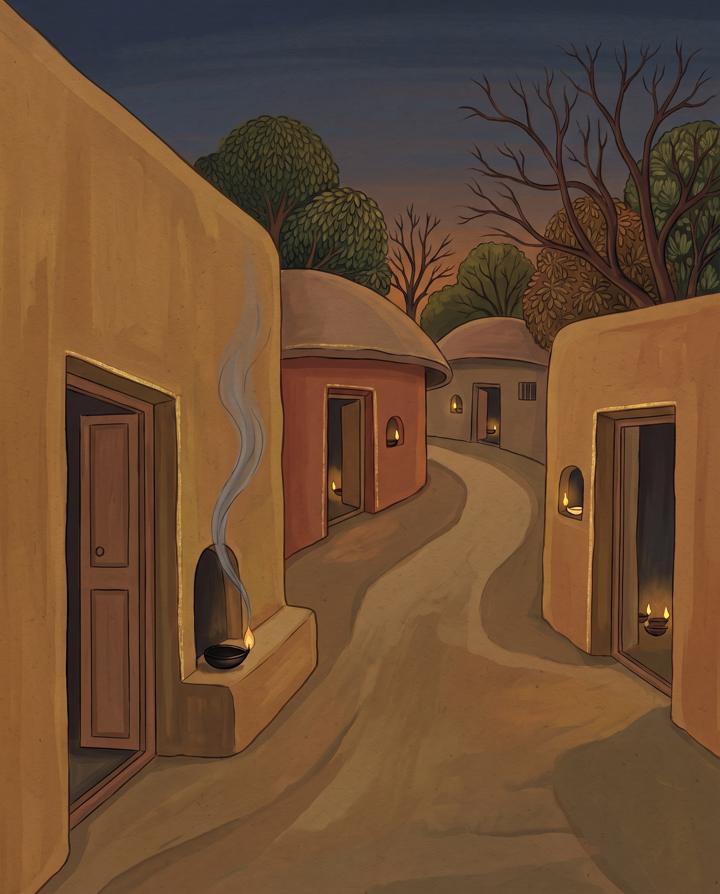
Though it ends for one whose purpose is fulfilled, it does not end, because it is shared with others.
Word by word
- kṛta-artham
- one whose purpose is fulfilled
- prati
- toward, for
- naṣṭam
- ceased
- api
- although
- anaṣṭam
- not ceased
- tad-anya
- others besides that one
- sādhāraṇatvāt
- because it is shared, common
Where it fits
Vyāsa asks why the seen does not simply cease (Woods p. 159). Because it is shared with other selves still bound. Two things follow: liberation is one self's, not the end of the world, and the joining of seer and seen, Vyāsa says, has no beginning (Woods p. 159). 2.23 says what the joining is.
Reading
For one who is liberated, the seen has done its work and ceases, for them. But it does not vanish, because it is shared with everyone else. Liberation doesn't mean the world disappearing. The dance stops for the one who has fully seen it and goes on for those still watching. It is a note of humility, and of company: your path doesn't cancel anyone else's.
Vyāsa
“Though it has ended for the self that is skilled, it has not fulfilled its purpose for selves that are not. So for them it becomes the object of seeing, and takes its being from the form of another.”
Vyāsa's Yoga-bhāṣya, the oldest commentary. New translation from the Sanskrit, with reference to Woods (1914), p. 159.
Practice
Notice one thing that no longer troubles you but still troubles someone close to you. Be especially gentle with them about it today.
A question to sit with
Who is still in the middle of what you have come through?
Key ideas
prakṛti (nature, the seen), puruṣa (the seer, the self), kaivalya (liberation, aloneness)