II. Sādhana Pāda · The yoga of action (2.1–2.2)
2.1 · The Three Fires
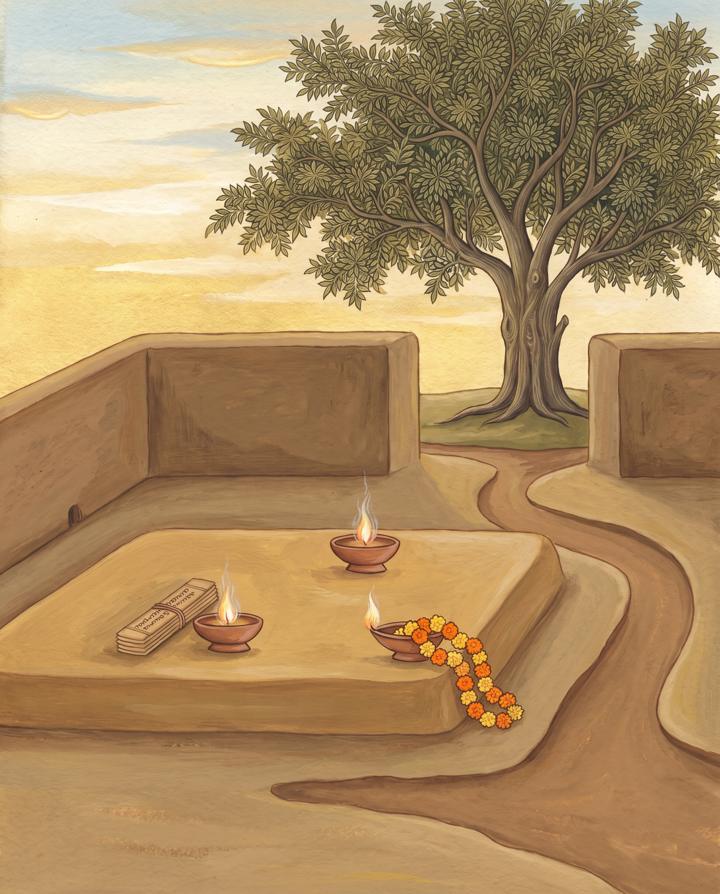
Discipline, study and devotion to Īśvara are the yoga of action.
Word by word
- tapaḥ
- heat; discipline, effort that burns away
- svādhyāya
- study and recitation of sacred texts
- īśvara-praṇidhānāni
- devotion to Īśvara; offering up the work
- kriyā-yogaḥ
- the yoga of action
Where it fits
The second pāda, on practice, opens here. Pāda 1 described yoga for a settled mind; Vyāsa says this one begins for someone whose mind still runs outward (Woods p. 103). It answers first with the yoga of action, then diagnoses suffering and its cause (2.3–2.27), then sets out five of the eight limbs (2.28–2.55).
Reading
The second pāda opens with the practical yoga, for minds not yet still. It has three parts. Tapas, literally heat, is steady discipline that burns off impurity. Svādhyāya is study: for Vyāsa, reciting purifying words such as Om, or studying the texts on liberation. Īśvarapraṇidhāna is devotion to Īśvara, the distinct self of 1.24–1.27, never bound, teacher of the ancients: offering every action to him, the supreme teacher, or giving up its fruit. Effort, study and devotion each go wrong on their own. Together they make a practice.
Vyāsa
“Yoga does not succeed for someone without discipline. Impurity, coloured by latent tendencies from karma and afflictions that have no beginning, and with its net of objects spread before it, does not break up except through discipline.”
Vyāsa's Yoga-bhāṣya, the oldest commentary. New translation from the Sanskrit, with reference to Woods (1914), p. 103.
Practice
Choose one small act for each fire today. Do something mildly difficult on purpose (tapas). Read one sūtra aloud three times (svādhyāya). At the end of the day, offer the day's actions and their results: to Īśvara, if that is your way, or by quietly giving up your claim to them (praṇidhāna).
A question to sit with
Which of the three fires is missing from your practice?
Where commentators disagree
What counts as tapas and svādhyāya, and how far should discipline go?
- Vyāsa
- Yoga is not perfected without discipline, because only discipline thins the old impurity. But it is to be practised only so far as it does not disturb the calm of the mind. Study is reciting purifying formulas such as Om, or studying the books on liberation. (Woods 1914, p. 103)
- Vācaspati Miśra
- Answering the objection that self-mortification upsets the body and so harms yoga, he says discipline should be done only so long as it does not throw the bodily humours into disorder. His examples of study are Vedic and Purāṇic texts such as the Puruṣa hymn. (Woods 1914, p. 104)
- Bhoja
- Tapas means the penances and fasts laid down in the Dharmaśāstra. Study means the muttered repetition of formulas preceded by Om; he does not mention the study of books. (Tatya 1885, p. 50; Mitra 1883, wisdomlib on 2.1)
Key ideas
kriyā-yoga (the yoga of action), īśvara (the Lord), citta (the mind-field)