I. Samādhi Pāda · Truth-bearing wisdom (1.47–1.51)
1.51 · The Empty Pod
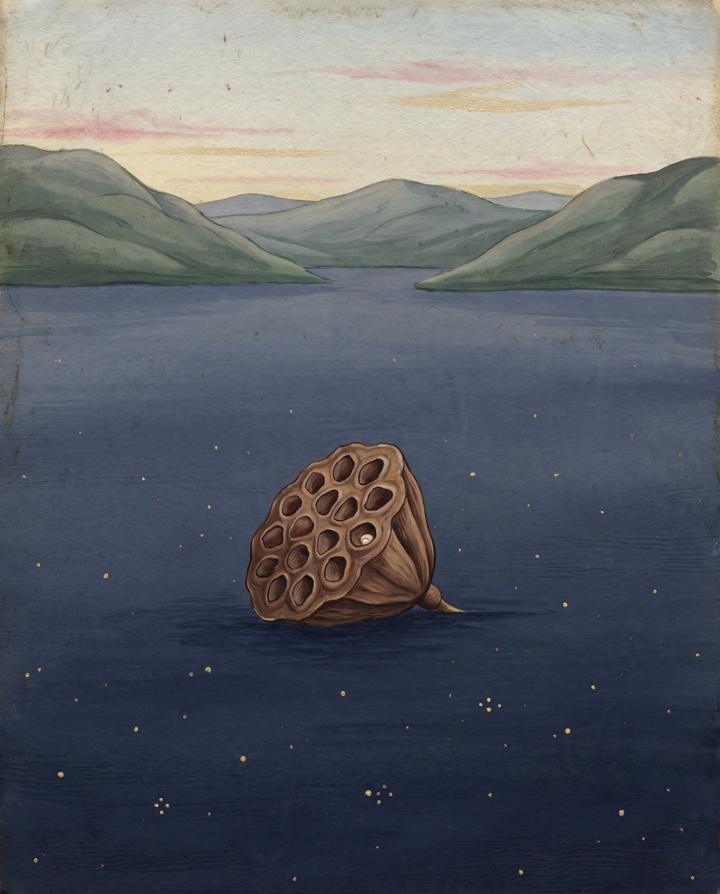
When even that is stilled, everything is stilled: this is absorption without a seed.
Word by word
- tasya
- of that
- api
- even
- nirodhe
- in the stilling
- sarva-nirodhāt
- because all is stilled
- nirbījaḥ
- seedless
- samādhiḥ
- absorption
Where it fits
Vyāsa asks what further comes (Woods p. 98). The pāda ends with the nirodha of 1.2 complete, the seed of 1.18 and 1.50 gone, and the seer of 1.3 resting in itself. Vyāsa then opens Book II: yoga for the absorbed mind has been taught; how can the outward-turned mind practise it? (Woods p. 103).
Reading
The pāda ends where it began, with nirodha (1.2). Even the impression of insight from 1.50 is stilled at last, and with it everything: no object remains, and no seed of further movement. This is seedless absorption. Vyāsa says the mind, its task done, ceases, and the self abides in itself, pure and liberated. Patañjali does not describe the state, since nothing is left to describe. 3.8 calls even the inner limbs outer to it, and Book IV returns to this end.
Vyāsa
“Because the mind, its task finished, withdraws together with the impressions that lead to freedom, when it has withdrawn the self rests in its own nature alone. So it is called pure, alone and free.”
Vyāsa's Yoga-bhāṣya, the oldest commentary. New translation from the Sanskrit, with reference to Woods (1914), p. 98.
Practice
At the end of a sitting today, let go of the object you used, the breath or a word, and of the wish to be calm. Rest for two minutes with nothing to hold. If thoughts return, let them be. If this feels unsettling, open your eyes and return to the breath.
A question to sit with
Are you waiting for a final state?
Key ideas
samādhi (absorption), nirodha (stilling), saṃskāra (latent impressions), kaivalya (liberation, aloneness)