IV. Kaivalya Pāda · Time and objects (4.12–4.17)
4.13 · Three Strands
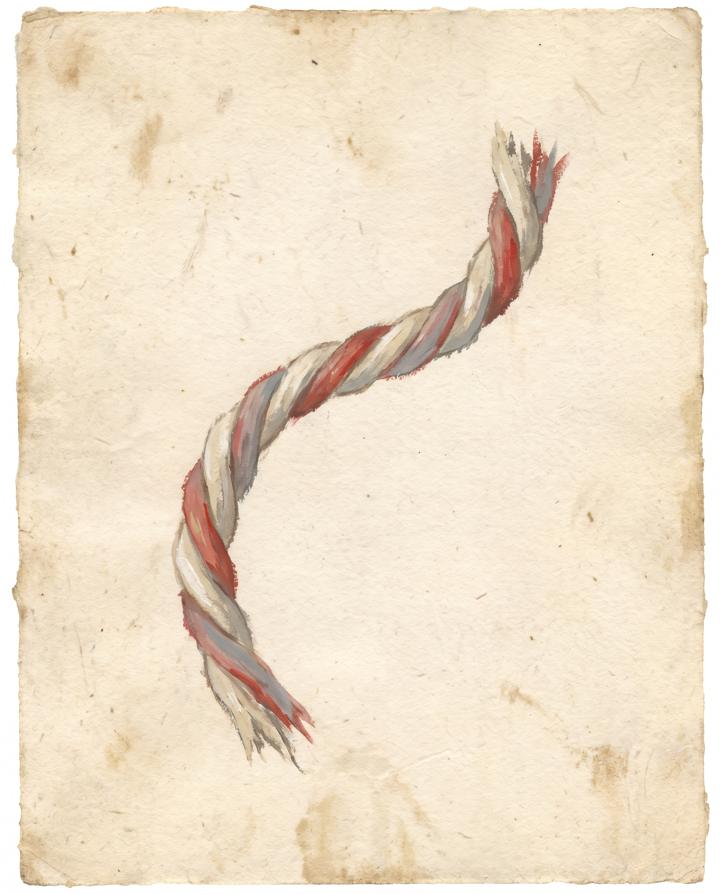
They are manifest or subtle, and made of the guṇas.
Word by word
- te
- they
- vyakta
- manifest
- sūkṣmāḥ
- subtle
- guṇa-ātmānaḥ
- having the guṇas as their nature
Where it fits
Whatever is on the three time-paths of 4.12, manifest or subtle, is made of the guṇas. Vyāsa quotes a verse: their deepest form is never seen. This grounds everything in the seen of 2.18–2.19. It also raises Vyāsa's question before 4.14: if all is three guṇas, how is anything one thing?
Reading
Everything, past, present or future, is made of the three guṇas: sattva, rajas and tamas, that is, lightness (or clarity), activity and inertia. What is present is manifest; what is past or future is subtle. Vyāsa quotes an older verse: the guṇas in their deepest form never come into view, and whatever does come into view is like a magic show, quite empty. Vācaspati softens it: the seen world is like a phantom, but not quite a phantom. The world is real, as the next sūtras argue, and also never quite what it seems.
Vyāsa
“All this is nothing but a particular arrangement of the guṇas. … So the teaching of the system says: 'The guṇas' deepest form / never comes into view. / What does come into view / is like a magic show, quite empty.'”
Vyāsa's Yoga-bhāṣya, the oldest commentary. New translation from the Sanskrit, with reference to Woods (1914), p. 317.
Practice
Look at three things near you and name the strand strongest in each: a lamp for clarity, running water for activity, a heavy stone for inertia. Then do the same for your own mood right now.
A question to sit with
Which strand is strongest in you right now?