III. Vibhūti Pāda · Discernment and liberation (3.49–3.55)
3.52 · The Atom of Time
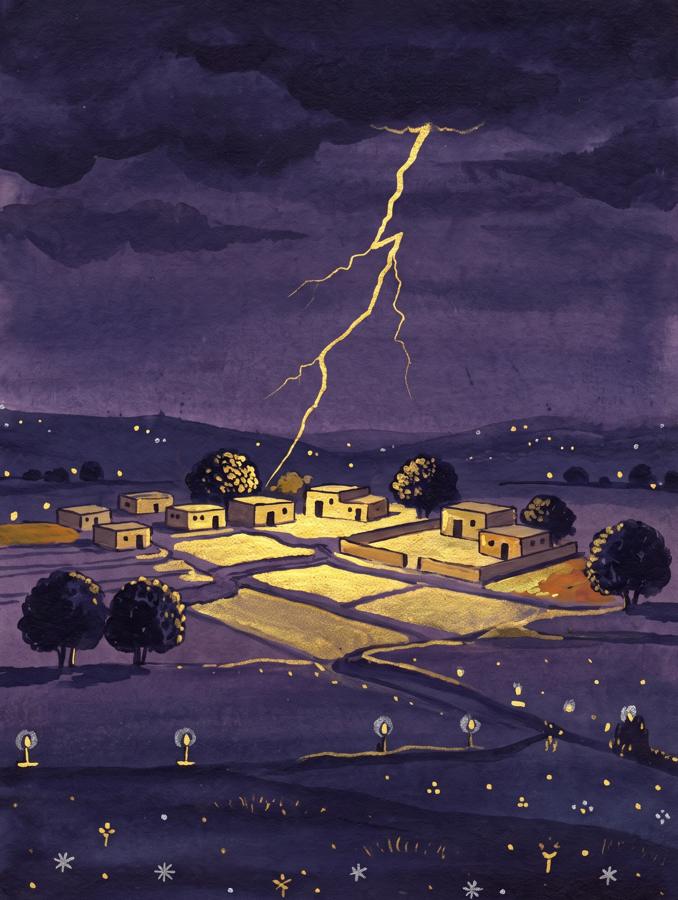
Saṃyama on the moment and its succession gives the knowledge born of discernment.
Word by word
- kṣaṇa
- moment, instant
- tat-kramayoḥ
- and its sequence
- saṃyamāt
- from saṃyama
- viveka-jam
- born of discernment
- jñānam
- knowledge
Where it fits
How is the knowledge born of discernment reached? By saṃyama on the moment and its sequence. Vyāsa says only one moment is ever present; hours and days are the mind's sums (p. 287–288). The analysis of change in 3.9–3.15 reaches its smallest unit. 4.33 defines sequence the same way.
Reading
Here the analysis of change that opened the pāda (3.9–3.15) reaches its smallest unit. Vyāsa explains: as the atom is the smallest unit of matter, the moment is the smallest unit of time. Only one moment is ever present. Hours and days are mental constructions, sums the mind adds up. And in each single moment the whole world changes. Much of what binds us lives in the stories we build out of moments that are already gone or not yet here.
Vyāsa
“Just as the atom is matter at its smallest limit, so the moment is time at its smallest limit. … So only a single moment is present; earlier and later moments do not exist. … The whole world undergoes change in that one moment.”
Vyāsa's Yoga-bhāṣya, the oldest commentary. New translation from the Sanskrit, with reference to Woods (1914), p. 287–288.
Practice
Sit for two minutes and listen to something that keeps a beat: a clock, a dripping tap or any steady sound. With each beat, notice only this one. When the mind starts telling a story, return to the next beat.
A question to sit with
What is happening in this one moment?
Where commentators disagree
Is time something real, or a construction from moments, and how close is this to Buddhist views?
- Vyāsa
- As the atom is the smallest unit of matter, the moment is the smallest unit of time, and a sequence is the unbroken flow of moments. Hours and days are put together by the mind: time is a mental construction that follows perceptions and words. Only the present moment is real, and in it the whole world changes. (Woods 1914, pp. 287–288)
- J. H. Woods
- The moment belongs to real things but there is no time outside the sequence of moments, so this theory lies midway between that of the Buddhists and that of the Vaiśeṣika school, and resembles the Jain doctrine. (Woods 1914, p. 288, n. 1)
- Vijñānabhikṣu
- As Dasgupta reports him, takes the moment as the time a guṇa-unit takes to move through its own unit of space, and distinguishes this from the Buddhist view that everything is momentary, since Yoga does not hold that there is nothing but moments. (Dasgupta 1924, p. 45, n.)
Key ideas
viveka (discernment), saṃyama (holding together), prajñā (wisdom)