III. Vibhūti Pāda · Discernment and liberation (3.49–3.55)
3.53 · Two Myrobalans
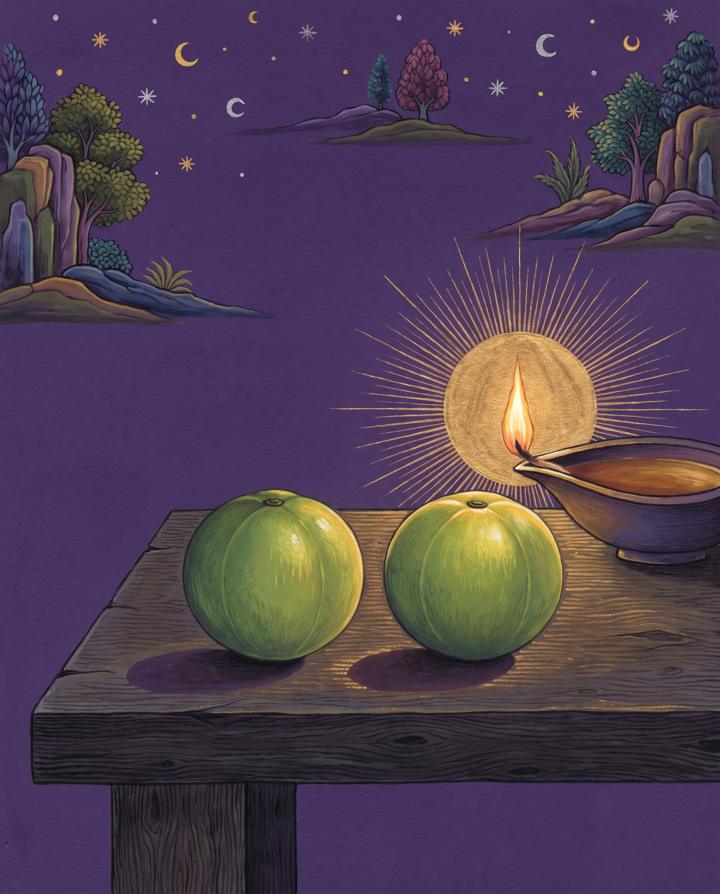
From it comes the ability to tell apart two things so alike that kind, mark and place cannot distinguish them.
Word by word
- jāti
- kind, class
- lakṣaṇa
- distinguishing mark
- deśaiḥ
- and by place
- anyatā
- difference
- anavacchedāt
- from not being distinguished
- tulyayoḥ
- of two similar things
- tataḥ
- from that
- pratipattiḥ
- knowing, telling apart
Where it fits
Vyāsa introduces this sūtra as a particular object of that knowledge (p. 290). It tells apart things that kind, mark and place cannot, like two identical fruits swapped unseen. The pair that matters most is mind and self, alike enough to be confused (3.35). 3.54 then defines the knowledge itself.
Reading
We usually tell things apart by kind (a cow, a mare), by mark (this cow is black-eyed), or by place. Vyāsa's example: two myrobalan fruits, alike in kind and mark, are told apart only by which is in front. Swap them while the observer looks away, and ordinary knowing fails. The knowledge born of discernment can still tell them apart. The pair that matters most is the clear mind and the self, so alike that we confuse them (3.35).
Vyāsa
“When two āmalaka fruits are alike in kind and in mark, a difference of place is what tells them apart: 'This one is in front, that one behind.' But when the front fruit is moved … into the place of the one behind, … they cannot be told apart.”
Vyāsa's Yoga-bhāṣya, the oldest commentary. New translation from the Sanskrit, with reference to Woods (1914), p. 290.
Practice
Take two very similar things, two coins or two leaves, and study one closely for two minutes until you know it. Shuffle them behind your back and see if you can tell which is which. Notice what you had to look for.
A question to sit with
What two things are you confusing because they look alike?