III. Vibhūti Pāda · Transformations (3.9–3.15)
3.15 · The Potter's Sequence
Differences in sequence cause differences in transformation.
Word by word
- krama
- sequence, order
- anyatvam
- difference
- pariṇāma
- transformation
- anyatve
- in the difference of
- hetuḥ
- cause
Where it fits
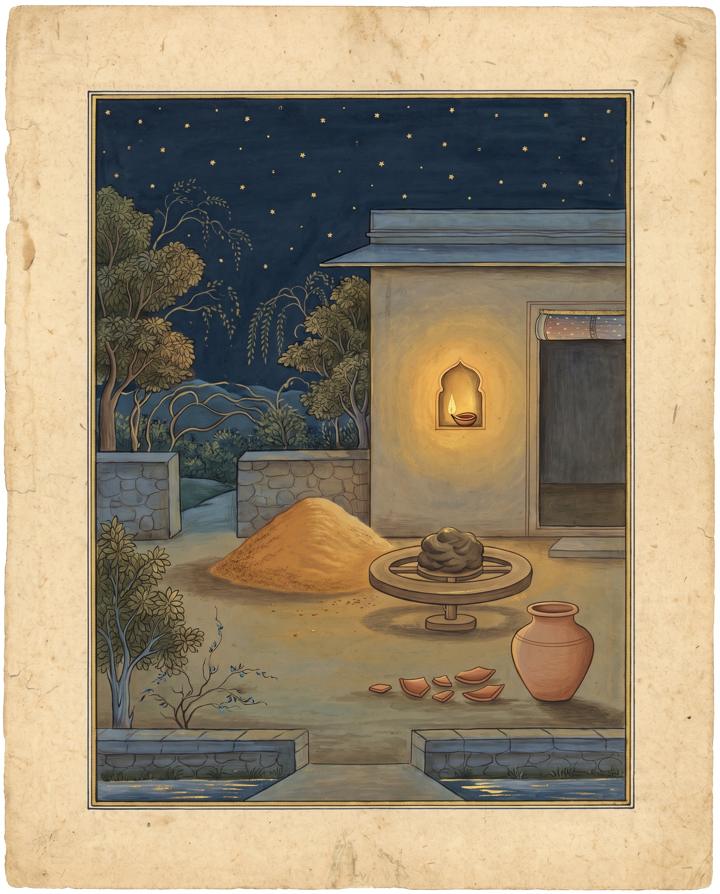
Why does a substance change in one order and not another? Because sequences differ. Vyāsa's clay passes from powder to lump to pot to shards (p. 229). This closes the theory of change: if change follows a sequence, a mind that sees the sequence can see past and future (3.16).
Reading
Why does one substance change in one order and not another? Because of sequence. Vyāsa's example is clay: dust, then a lump, then a water-jar, then potsherds, then small bits. Each form follows from the one before, and a new jar shows its age first at the rim. Change is orderly, and different sequences give different results. This prepares 3.16: whoever sees a sequence clearly can see where a thing came from and where it is going.
Vyāsa
“For example: clay as powder, clay as a lump, clay as a pot, clay as broken shards, clay as grains. That is a sequence.”
Vyāsa's Yoga-bhāṣya, the oldest commentary. New translation from the Sanskrit, with reference to Woods (1914), p. 229.
Practice
Take one change in your life, such as a friendship, a habit or a skill, and write its sequence in five steps, like dust, lump, jar, shard, bits. Where is it now? What step usually comes next?
A question to sit with
Where are you in this sequence?