III. Vibhūti Pāda · Knowledge through saṃyama (3.16–3.24)
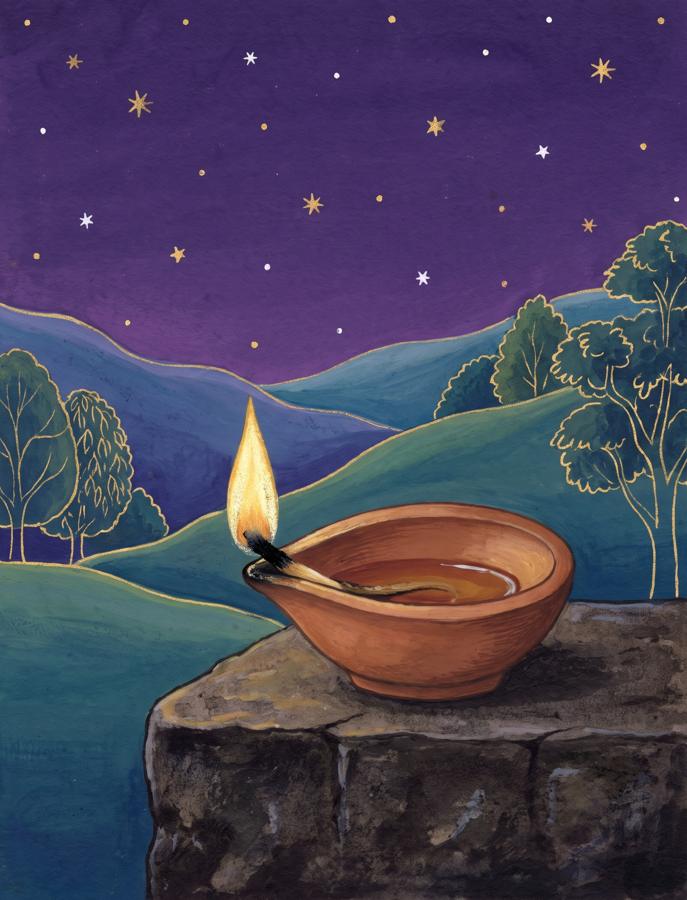
3.16 · The Half-Burnt Wick
Saṃyama on the three transformations gives knowledge of past and future.
Word by word
- pariṇāma-traya
- the three transformations
- saṃyamāt
- from saṃyama on
- atīta
- past
- anāgata
- future
- jñānam
- knowledge
Where it fits
Here the results of saṃyama begin. Vyāsa marks the shift: from now on, the objects of saṃyama are set out for the yogi who has every means (p. 232). The first object is the three transformations just taught (3.13), and the result is knowledge of past and future.
Reading
Here the powers begin. Patañjali says that saṃyama on the three transformations of 3.13 gives knowledge of past and future. Vyāsa explains that when the transformations are seen directly, past and future are seen in them, since every change contains both. Patañjali presents this as a real attainment. Many modern readers also take it as the trained ability to see where things have come from and where they are heading. Either way, 3.37, read broadly, warns that powers like this can become obstacles.
Vyāsa
“Through saṃyama on the transformations of quality, time and condition, yogis gain knowledge of the past and the future. … By this saṃyama, the three transformations, perceived directly, bring about knowledge of the past and future within them.”
Vyāsa's Yoga-bhāṣya, the oldest commentary. New translation from the Sanskrit, with reference to Woods (1914), p. 232–233.
Practice
Look closely at one thing that is changing: a plant, fruit ripening on the counter, a half-burnt candle. From what you see alone, work out its past and predict its next week. Check your prediction in seven days.
A question to sit with
What does the present already show of the past and the future?
Key ideas
saṃyama (holding together), siddhi (powers), prakṛti (nature, the seen)