III. Vibhūti Pāda · Inner maps (3.25–3.34)
3.34 · Lotus in the Citadel
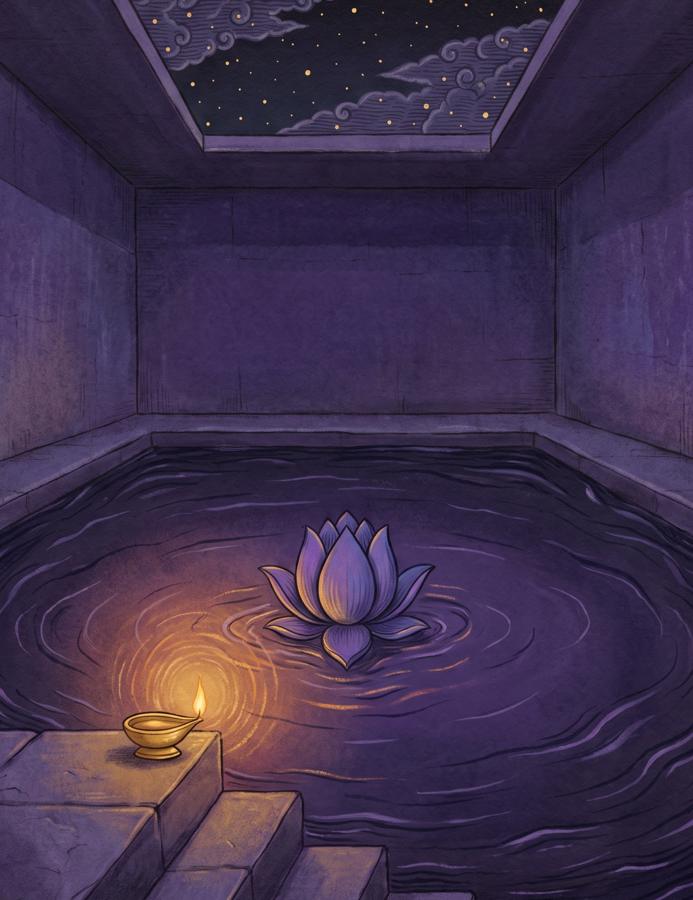
On the heart, understanding of the mind.
Word by word
- hṛdaye
- on the heart
- citta
- the mind
- saṃvit
- understanding, awareness
Where it fits
The run of objects ends inward. After the sky (3.26–3.28) and the body (3.29–3.32), saṃyama on the heart gives understanding of the mind itself. Vyāsa places it in the Upaniṣadic 'city of Brahman' (p. 262). Knowing the mind sets up 3.35: knowing what the mind is not.
Reading
The run of objects ends inward, at the heart, hṛdaya. Vyāsa borrows the words of the Chāndogya Upaniṣad: in this citadel of Brahman there is a small house, a tiny lotus, and saṃyama there brings awareness of the mind. In Indian thought the heart is the seat of the mind as much as of feeling. After maps of the sky (3.26–3.28) and of the body (3.29–3.32), attention reaches the knower of both, and the mind turns to know itself.
Vyāsa
“In this city of Brahman there is a small lotus, a dwelling: consciousness is there. Through saṃyama on it comes understanding of the mind.”
Vyāsa's Yoga-bhāṣya, the oldest commentary. New translation from the Sanskrit, with reference to Woods (1914), p. 262.
Practice
Rest one hand on the centre of your chest. Ask quietly, 'What is my mind like right now?' Answer in three plain words, such as 'busy, tender, tired'. Don't try to change it. Do this three times during the day and notice how it shifts.
A question to sit with
What is your mind like, right now?