III. Vibhūti Pāda · Inner maps (3.25–3.34)
3.31 · The Tortoise Channel
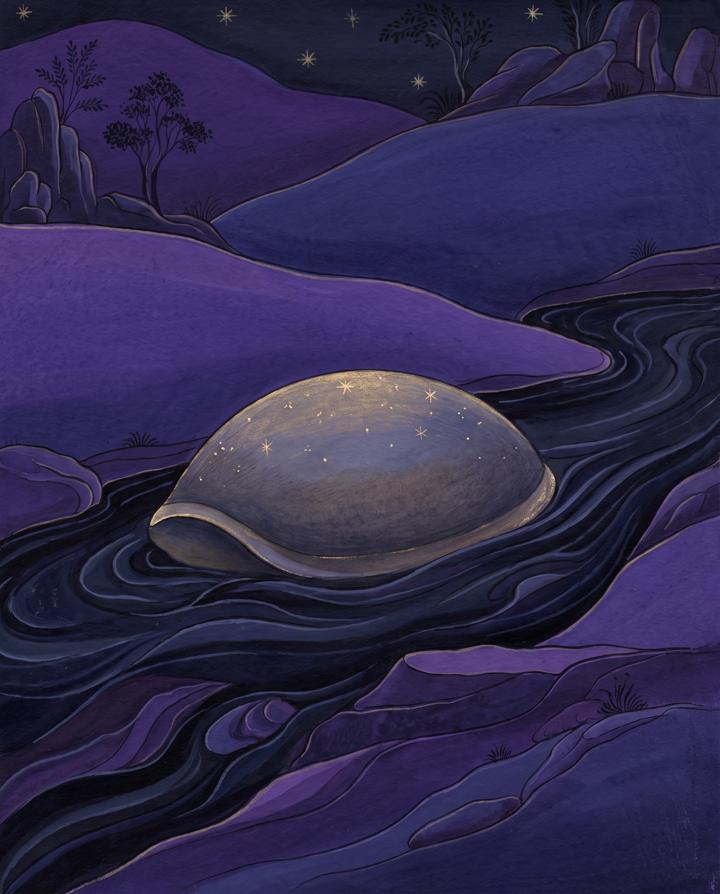
On the tortoise channel, steadiness.
Word by word
- kūrma-nāḍyām
- on the tortoise channel
- sthairyam
- steadiness, stability
Where it fits
Below the throat-well, Vyāsa places a tortoise-shaped channel in the chest (p. 261). Saṃyama there gives steadiness, which he likens to a resting snake or lizard. In the climb from navel to crown (3.29–3.32), this is steadiness (sthairya), the quality 2.46 first asked of posture (sthira).
Reading
Below the throat-well, Vyāsa says, there is a channel in the chest shaped like a tortoise. Saṃyama on it gives steadiness, which he compares to the stillness of a snake or lizard at rest. The tortoise is an old Indian image of composure: in the Bhagavad Gītā (2.58) the steady sage draws in the senses as a tortoise draws in its limbs. Commentators differ on whether the steadiness meant here is of the body, the mind, or both.
Vyāsa
“Below the well, in the chest, is a channel shaped like a tortoise. Having made saṃyama on it, one becomes still, like a snake or a monitor lizard.”
Vyāsa's Yoga-bhāṣya, the oldest commentary. New translation from the Sanskrit, with reference to Woods (1914), p. 261.
Practice
Sit comfortably and rest your attention at the centre of your chest for five minutes. Let the body settle as still as is easy. Each time an urge to shift or scratch arises, notice it first. Move if you need to, but let the noticing come before the moving.
A question to sit with
What would help you stay still and steady today?
Key ideas
saṃyama (holding together), siddhi (powers), āsana (posture, seat)