III. Vibhūti Pāda · Inner maps (3.25–3.34)
3.30 · The Throat's Well
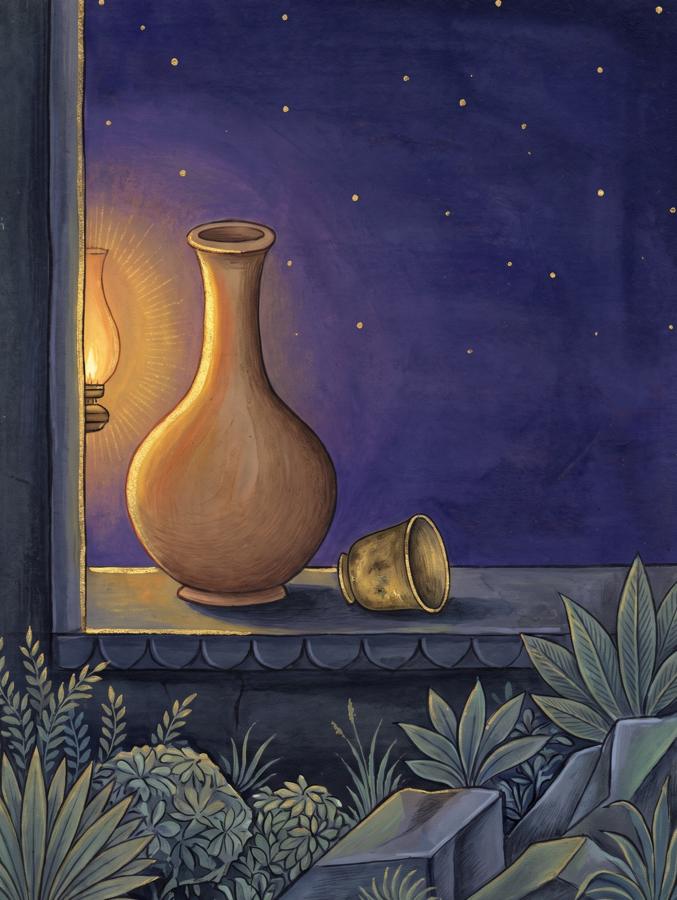
On the hollow of the throat, hunger and thirst cease.
Word by word
- kaṇṭha-kūpe
- on the well, the hollow, of the throat
- kṣut
- hunger
- pipāsā
- thirst
- nivṛttiḥ
- ceasing, turning back
Where it fits
Up from the navel (3.29) to the throat. Saṃyama on the hollow of the throat ends hunger and thirst; Vyāsa says they no longer torment the yogi (p. 260). After knowing the body comes freedom from its most pressing needs, and then steadiness in 3.31.
Reading
Vyāsa locates the place exactly: below the tongue a cord, below that the throat, below that the well. Saṃyama there, Patañjali says, brings hunger and thirst to an end. Vyāsa's wording is gentler: they no longer torment one. The body still needs food and water. Read practically, what loosens is the grip of craving. Patañjali places this among the powers of deep practice. It is not a reason to go without meals.
Vyāsa
“Below the tongue is a cord. Below the cord is the throat, and below that the well. Through saṃyama on it, hunger and thirst no longer torment one.”
Vyāsa's Yoga-bhāṣya, the oldest commentary. New translation from the Sanskrit, with reference to Woods (1914), p. 260.
Practice
Before one meal today, sit for a minute with your attention at the hollow at the base of your throat. Notice the difference between the body's need and the mind's urgency. Then eat as usual, slowly, and stop when you are satisfied.
A question to sit with
Which of your hungers is need, and which is craving?