III. Vibhūti Pāda · Saṃyama (3.1–3.8)
3.4 · Three Wicks, One Flame
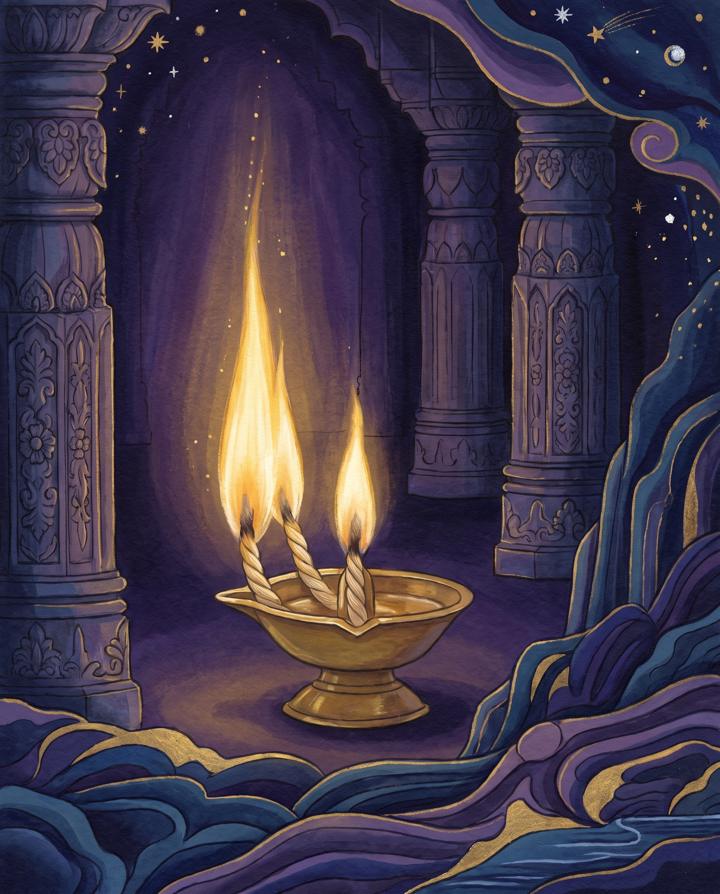
The three on a single object are saṃyama.
Word by word
- trayam
- the three
- ekatra
- on one (object); in one place
- saṃyamaḥ
- saṃyama; holding together, integration
Where it fits
Having defined three limbs, Patañjali gives them one name, saṃyama, when they rest on one object. Vyāsa calls it the system's technical term (p. 205). The name carries the rest of the pāda: from 3.16 on, almost every result is said to come 'from saṃyama' on something.
Reading
Concentration, meditation and absorption, held on a single object, get one name: saṃyama. Vyāsa calls it the system's technical term, so the three need not be listed each time. From 3.16 on, most sūtras in this pāda say 'by saṃyama on this, that follows'. The word means holding together. Because the three share one object, they work less like stages you leave behind and more like one act seen from three sides.
Vyāsa
“These three, concentration, meditation and absorption, taken together are saṃyama. When the three means have a single object, they are called saṃyama. So saṃyama is the system's technical term for these three.”
Vyāsa's Yoga-bhāṣya, the oldest commentary. New translation from the Sanskrit, with reference to Woods (1914), p. 205.
Practice
Pick one object, a leaf or a candle. Spend two minutes tying attention to it, two minutes letting attention flow toward it, and two minutes letting yourself disappear into it. Then sit six minutes without dividing. Was it one act or three?
A question to sit with
What are you willing to hold your whole attention on?
Key ideas
saṃyama (holding together)