III. Vibhūti Pāda · Knowledge through saṃyama (3.16–3.24)
3.22 · The Drying Cloth
Karma is quick or slow to ripen. By saṃyama on it, or from omens, comes knowledge of one's death.
Word by word
- sopakramam
- active, quick to ripen
- nirupakramam
- dormant, slow to ripen
- ca
- and
- karma
- karma, action and its fruit
- tat-saṃyamāt
- from saṃyama on it
- aparānta
- the last end, death
- jñānam
- knowledge
- ariṣṭebhyaḥ
- from omens
- vā
- or
Where it fits
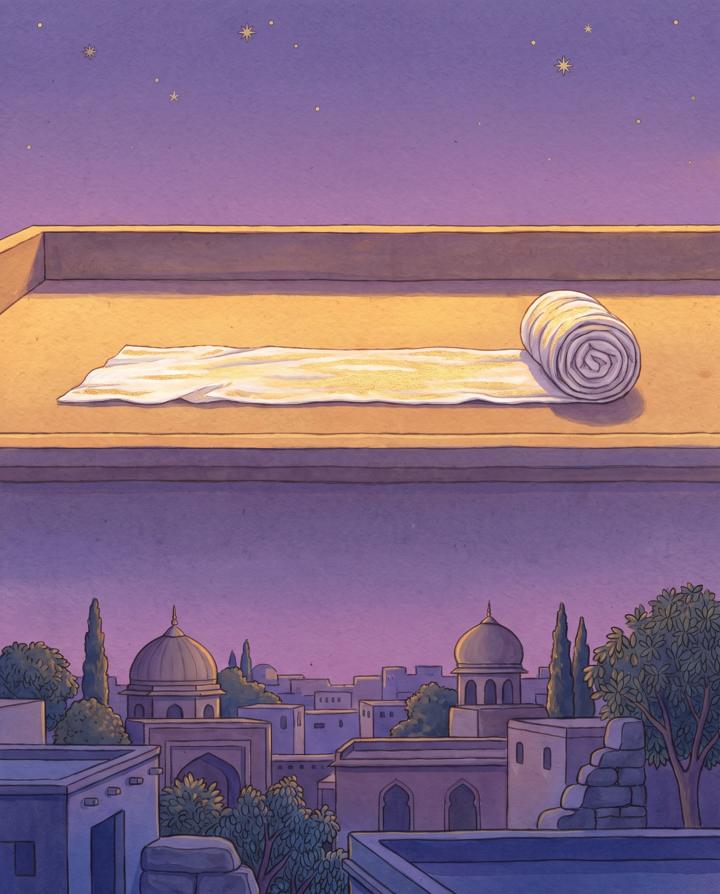
Saṃyama now falls on the karma that sets the length of a life (2.13). It ripens quickly or slowly, and knowing it, or reading omens, gives knowledge of one's death. Vyāsa's wet cloth, spread out or rolled up, shows the two speeds (p. 251). The list then turns from knowledge to strengths.
Reading
Karma that sets the length of a life ripens quickly or slowly. Vyāsa's images: a wet cloth spread out dries fast, the same cloth rolled into a ball dries slowly; fire in dry grass spreads at once, fire fed bit by bit burns long. Saṃyama on this karma, Patañjali says, gives knowledge of one's death; so, he adds, do omens. Vyāsa lists omens that are simply noticed, such as no longer hearing the inner sound with ears stopped. One way to read this today: how would you live if you knew your time?
Vyāsa
“A wet cloth spread out dries in a short time: so is karma that ripens quickly. The same cloth rolled into a ball dries only after a long time: so is karma that ripens slowly.”
Vyāsa's Yoga-bhāṣya, the oldest commentary. New translation from the Sanskrit, with reference to Woods (1914), p. 251.
Practice
Sit quietly for five minutes and ask: if I had one year, what would I stop doing, and what would I start? Write one of each, and do the smaller one this week. Keep the tone kind. If this is a hard week for thinking about endings, choose another day.
A question to sit with
If you knew your time, what would change today?
Key ideas
karma (action and its residue), saṃyama (holding together), siddhi (powers)