II. Sādhana Pāda · Thinning the afflictions (2.10–2.14)
2.13 · Root and Fruit
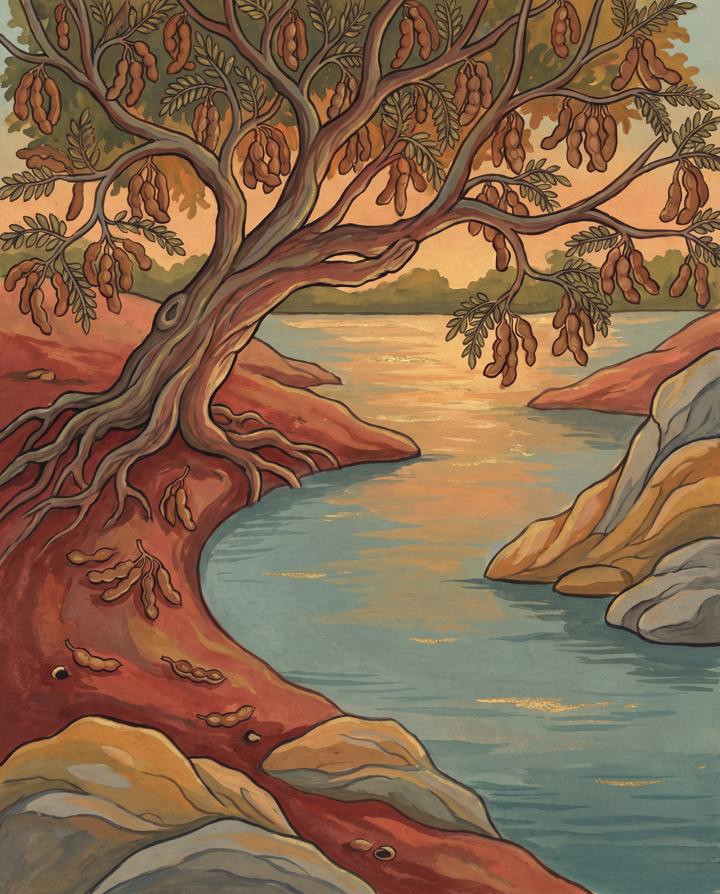
While the root remains, it ripens as birth, length of life and experience.
Word by word
- sati mūle
- while the root exists
- tat-vipākaḥ
- its ripening
- jāti
- birth; the kind of life
- āyuḥ
- length of life
- bhogāḥ
- experiences
Where it fits
Continuing 2.12, the text names karma's three fruits, birth, length of life and experience, and attaches a condition: only while the root remains. That condition is the hinge of this passage. Thinning and burning the afflictions (2.2, 2.10–2.11) stops karma bearing new fruit. 2.14 says how the fruit is felt.
Reading
As long as the root, the afflictions, is alive, karma ripens in three ways: the kind of life you are born into, how long it lasts, and what you experience in it. The heart of the sūtra is in its first two words: while the root is there. Cut the root and the tree may stand a while, but it bears no new fruit.
Vyāsa
“Grains of rice still in their husks, while the seed is unburned, can sprout; once the husk is removed, or the seed is burned, they cannot. In the same way, the store of karma, while wrapped in afflictions, sprouts into ripening …”
Vyāsa's Yoga-bhāṣya, the oldest commentary. New translation from the Sanskrit, with reference to Woods (1914), p. 122–123.
Practice
Draw a simple tree. Make the roots one affliction, the branches the habits it drives, and the fruits their results. Mark one place where you could work at the root instead of the fruit.
A question to sit with
Which root keeps bearing the same fruit?