II. Sādhana Pāda · Thinning the afflictions (2.10–2.14)
2.12 · The Granary
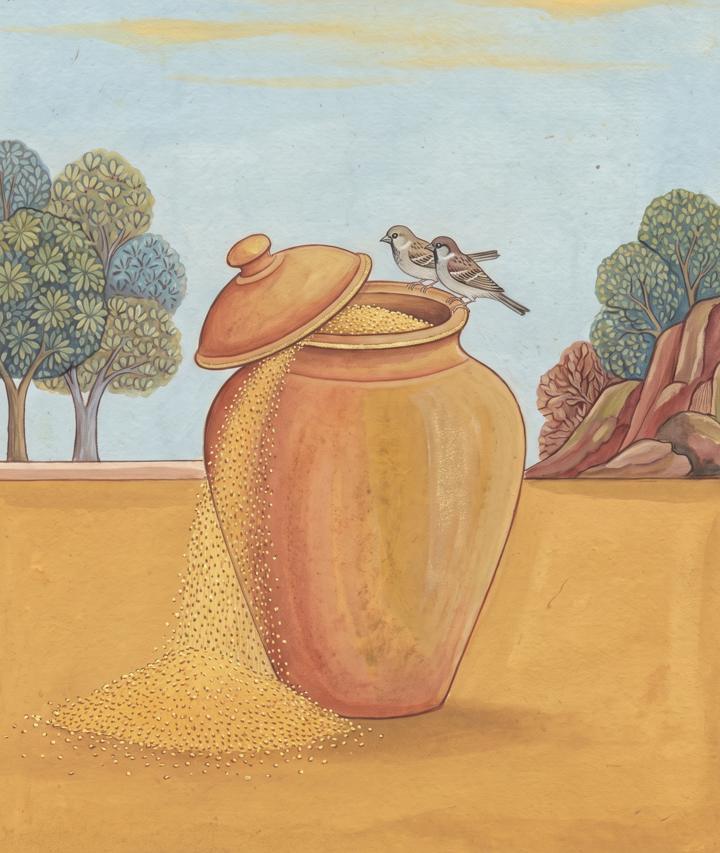
The store of karma is rooted in the afflictions and is felt in this life or in lives not yet seen.
Word by word
- kleśa-mūlaḥ
- rooted in the afflictions
- karma-āśayaḥ
- the store or residue of action
- dṛṣṭa
- seen (this life)
- adṛṣṭa
- unseen (lives to come)
- janma
- birth, life
- vedanīyaḥ
- to be experienced
Where it fits
Why must the afflictions be removed and not merely calmed? Because they are the root of karma. Every action they drive leaves a store that will be felt, in this life or in lives not yet seen. This ties the psychology of 2.3–2.11 to the moral order, and 2.13 says what the ripening consists of.
Reading
Why must the afflictions be removed, and not merely calmed? Because they are the root of karma. Every action they drive leaves a karmāśaya, a store of tendencies that will be felt later, in this life or in lives not yet seen. Vyāsa adds that action done with keen intensity can bear its fruit at once, in this very life. Whatever your view of rebirth, the psychology is plain: what we do out of fear or craving trains us to do it again. The granary fills with whatever we harvest.
Vyāsa
“So the young Nandīśvara left his human form and was changed into a god. So too Nahuṣa, king of the gods, left his own form and was changed into an animal.”
Vyāsa's Yoga-bhāṣya, the oldest commentary. New translation from the Sanskrit, with reference to Woods (1914), p. 121.
Practice
Look at one habit you'd like to change and trace the affliction at its root. Today, do one action in the other direction, on purpose and with full attention.
A question to sit with
What are you storing up by what you do today?
Key ideas
karma (action and its residue), kleśa (afflictions), saṃskāra (latent impressions)