II. Sādhana Pāda · Posture (2.46–2.48)
2.47 · Meeting the Boundless
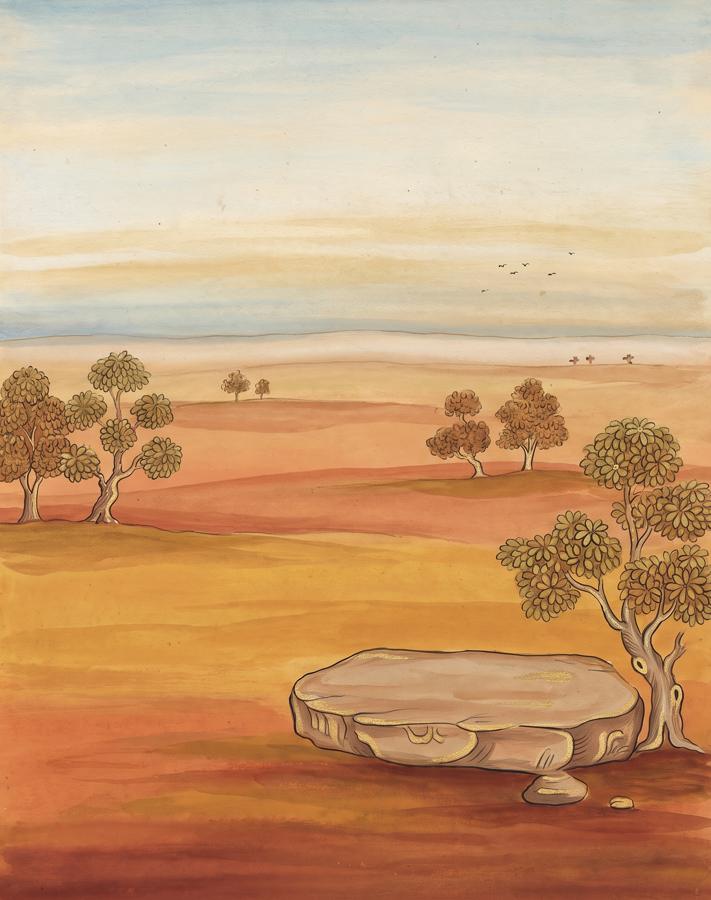
By relaxing effort and meeting the boundless.
Word by word
- prayatna
- effort
- śaithilya
- relaxing, loosening
- ananta
- the endless, the boundless
- samāpattibhyām
- through coalescence with
Where it fits
Completes the sentence of 2.46, as Vyāsa notes by supplying "[a posture] results" (Woods p. 192): posture becomes steady and easy by relaxing effort or, he says (vā), by the mind's coalescence with the boundless. The image of Ananta as the serpent holding up the earth is Vācaspati's. 2.48 gives the result.
Reading
How does a posture become steady and easy? In two ways: by relaxing effort, and by letting the mind meet the boundless. Ananta means endless. It is also the name of the cosmic serpent who holds up the world, and later commentators read the sūtra that way. Either way, the teaching is to stop holding yourself up and let the boundless hold you.
Vyāsa
“When effort ceases, the posture is accomplished, so that the body does not shake. Or the mind, in coalescence with the boundless, brings the posture about.”
Vyāsa's Yoga-bhāṣya, the oldest commentary. New translation from the Sanskrit, with reference to Woods (1914), p. 192.
Practice
In your seat, release one muscle you don't need on each exhale. After ten breaths, widen your attention to the space around you, as far as it will go, and rest in being held.
A question to sit with
What could hold you if you let go?
Where commentators disagree
What does the mind 'merge into' to make posture steady: infinity, or the serpent Ananta?
- Vivaraṇa (attributed to Śaṅkara)
- Infinitude means being infinite, the All. The mind, merged in it and pervading it, makes the posture firm. His wording shows that his text read ānantya, 'infinitude'. (Wujastyk 2018, p. 32 (tr. Maas and Wujastyk))
- Vācaspati Miśra
- The mind is brought into balance with Ananta, chief of serpents, who holds up the earth on his thousand very steady hoods. (Woods 1914, p. 192)
- Bhoja
- The mind rests in the boundlessness of space and identifies with it. With no sense of body or ego, the posture no longer causes pain. (Tatya 1885, p. 86; Mitra 1883, wisdomlib on 2.47)
- Dominik Wujastyk
- The oldest manuscripts read ānantya. As far as is known, Vācaspati was the first to bring in the serpent, and Vijñānabhikṣu and Rāmānanda Sarasvatī followed him. He links meditation on infinity to early Buddhist meditation on the infinity of space. (Wujastyk 2018, pp. 32–34)