II. Sādhana Pāda · Fruits of the observances (2.40–2.45)
2.42 · Enough
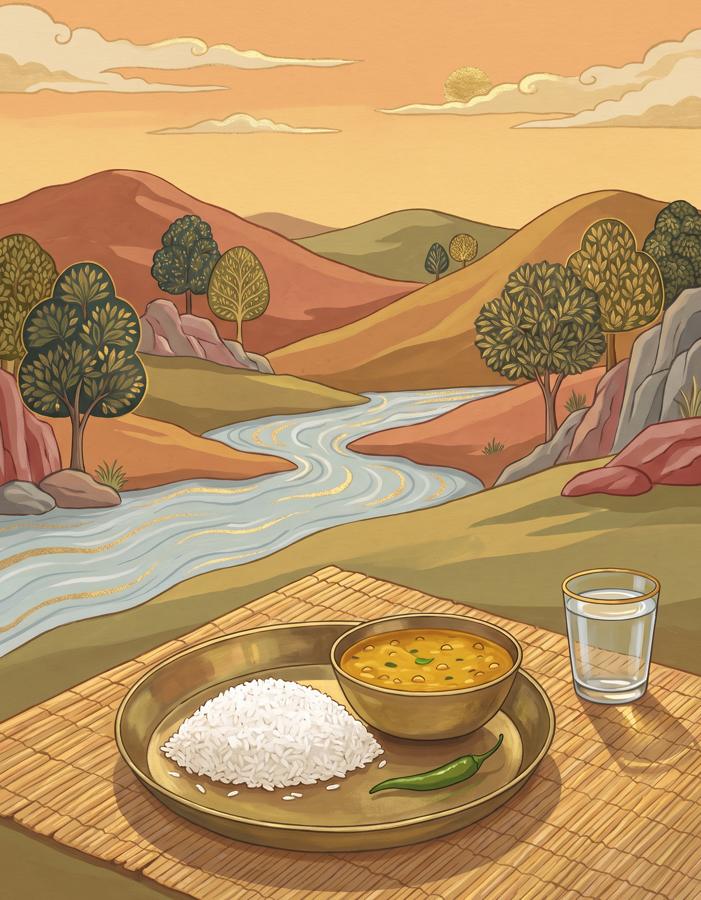
From contentment comes the gain of unsurpassed happiness.
Word by word
- saṃtoṣāt
- from contentment
- anuttamaḥ
- unsurpassed
- sukha
- happiness
- lābhaḥ
- gain
Where it fits
Second observance in the order of 2.32. Contentment's fruit is unsurpassed happiness. It answers the claim of 2.15 that pleasure from objects carries pain: this happiness comes from craving ending, as the verse Vyāsa quotes says (Woods p. 189). Discipline follows (2.43).
Reading
Vyāsa defined contentment on 2.32 as not wanting more than the means already at hand. Contentment isn't passivity. It means not making your peace depend on getting more. Here he quotes a verse: whatever pleasure desire finds in this world, and whatever great pleasure there is in heaven, is not worth a sixteenth part of the happiness that comes when craving ends. This answers 2.15, where even pleasure carried pain: that was pleasure from objects. Contentment is where the other happiness starts.
Vyāsa
“As it has been said: 'Whatever pleasure of desire there is in this world, and whatever great pleasure there is in heaven, neither is worth a sixteenth part of the happiness that comes when craving ends.'”
Vyāsa's Yoga-bhāṣya, the oldest commentary. New translation from the Sanskrit, with reference to Woods (1914), p. 189.
Practice
Each time you catch yourself wanting something today, add silently: 'and I already have enough.' Notice what changes.
A question to sit with
What is already enough?
Key ideas
aṣṭāṅga (the eight limbs), duḥkha (suffering), vairāgya (non-attachment)