II. Sādhana Pāda · Seer and seen (2.18–2.25)
2.25 · The Untied Rope
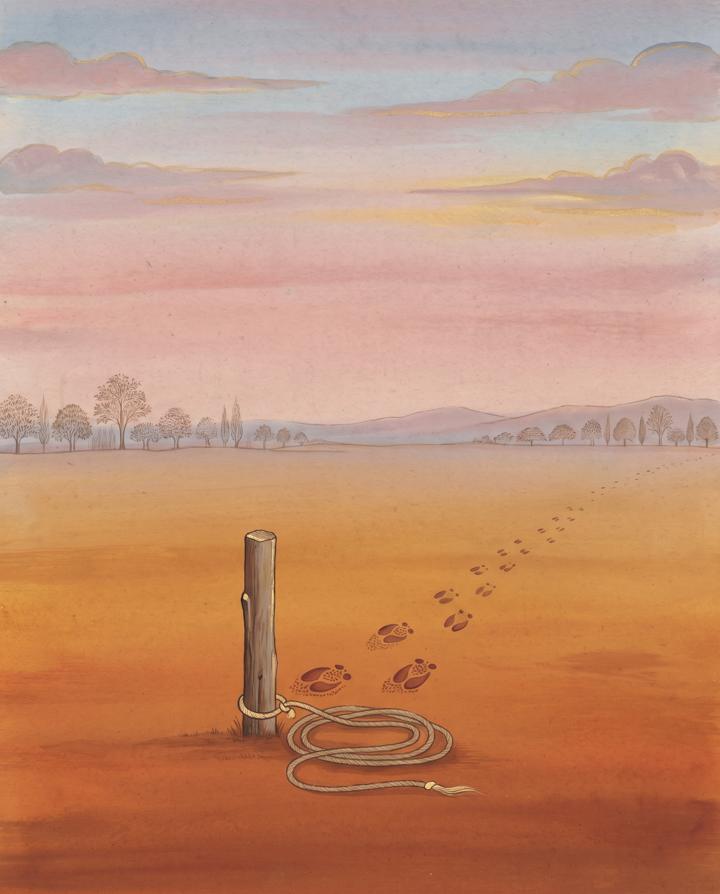
Without ignorance there is no joining. This release is the seer's liberation.
Word by word
- tat-abhāvāt
- from its absence (ignorance's)
- saṃyoga-abhāvaḥ
- the absence of joining
- hānam
- release, removal
- tat
- that
- dṛśeḥ
- of the seer
- kaivalyam
- liberation; literally, aloneness
Where it fits
The third part of the frame of 2.15: release. Vyāsa: with what is to be avoided and its cause stated, release comes next (Woods p. 168). Since the joining depends on ignorance (2.24), without ignorance there is no joining. This is kaivalya, first named here, the theme of the fourth pāda.
Reading
This is the third part of Vyāsa's medicine (2.15): health, which is release. With ignorance gone, the false joining goes too, and the seer is free: kaivalya, literally aloneness, first named here and the word that names the fourth pāda. Vyāsa describes something final: the self no longer mixed with the guṇas at all. Three of the four parts are now in place: the suffering to come (2.16), its cause (2.17, traced to ignorance at 2.24) and health. The remedy follows in 2.26.
Vyāsa
“When that not-seeing is absent, there is no joining of intellect and self; that is, bondage ends for good. This is release. This is the seer's freedom: the self no longer mixed [with anything] … Then the self is said to rest in its own nature.”
Vyāsa's Yoga-bhāṣya, the oldest commentary. New translation from the Sanskrit, with reference to Woods (1914), p. 168.
Practice
Sit for five minutes and rest as the one who knows. Let thoughts, sounds and feelings come and go without following them.
A question to sit with
What would remain if this confusion ended?
Key ideas
kaivalya (liberation, aloneness), avidyā (ignorance), puruṣa (the seer, the self)