I. Samādhi Pāda · Īśvara and Om (1.23–1.29)
1.26 · Teacher of the Ancients
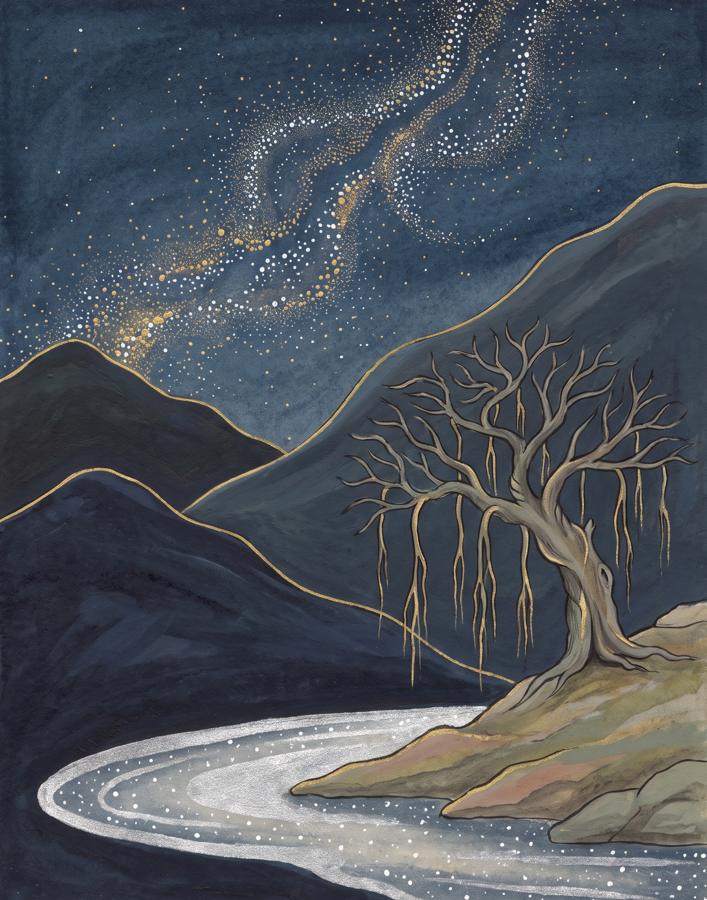
Not limited by time, Īśvara is the teacher even of the ancients.
Word by word
- pūrveṣām
- of the earlier ones, the ancients
- api
- even
- guruḥ
- teacher
- kālena
- by time
- anavacchedāt
- because not cut off, not limited
Where it fits
The third mark completes the portrait begun at 1.24: Īśvara is not limited by time, and so teaches even the first teachers. Vyāsa links it straight to 1.25 (Woods p. 59). Having said who Īśvara is, the text turns in 1.27 to how Īśvara is named.
Reading
Every human teacher learned from someone, and every lineage began somewhere in time. Patañjali places Īśvara before all of them: the teacher even of the first teachers, because time does not cut Īśvara off. Vyāsa adds that as Īśvara was perfect at the start of this creation, so at the start of every earlier one. The sūtra completes the description begun in 1.24. For the practitioner it says something humbling and steadying: the knowledge you receive did not begin with your teacher, or with theirs.
Vyāsa
“The ancient teachers are bounded by time. He whom time does not touch as a limit is the teacher even of the ancients. Just as he was perfect, in the highest degree, at the beginning of this creation, so he should be understood to have been at the beginnings of past creations too.”
Vyāsa's Yoga-bhāṣya, the oldest commentary. New translation from the Sanskrit, with reference to Woods (1914), p. 59.
Practice
Take one thing you know well, a recipe, a skill, a prayer, and trace it back through the people who taught it to you. Write down the names you know, then mark the unknown ones before them. Sit for two minutes with the length of that line.
A question to sit with
Who taught the one who taught you?
Where commentators disagree
Is Īśvara called guru here as 'teacher', or as 'the greatest'?
- Vyāsa
- The first teachers were limited by time; he to whom time does not apply is the teacher even of them. As he is perfect at the start of this creation, so he was at the start of past creations. (Woods 1914, p. 59)
- Bhoja
- He is the preceptor even of the first of created beings, such as Brahmā, because he has no beginning, while they had a beginning and so are limited by time. (Tatya 1885, p. 24; Mitra 1883, wisdomlib on 1.26)
- Rajendralala Mitra
- Translates guru as 'instructor' with the commentator, but suggests 'noblest' or 'greatest' would fit the reason better, since being beyond time explains pre-eminence, not teaching. (Mitra 1883, note on 1.26 (wisdomlib))
Key ideas
īśvara (the Lord)