I. Samādhi Pāda · Īśvara and Om (1.23–1.29)
1.25 · The Brightest Star
In Īśvara the seed of all-knowing is unsurpassed.
Word by word
- tatra
- there, in Īśvara
- niratiśayam
- unsurpassed, with nothing beyond
- sarva-jña
- all-knowing
- bījam
- seed
Where it fits
Vyāsa joins this to 1.24 with 'moreover' (Woods p. 55): a further mark of Īśvara. After freedom from affliction comes unsurpassed knowing. The theme of knowing without limit returns near the end of the text, at 4.31, where knowledge becomes infinite once every covering is removed.
Reading
A further mark of Īśvara, the distinct self of 1.24, is knowing without limit. Vyāsa's argument is from degrees. Our knowing is small in one person and greater in another, and whatever comes in degrees must reach a highest point somewhere. The one in whom it reaches that point is all-knowing. He adds that inference proves only that such a being exists; its name is learned from scripture. And though Īśvara needs nothing, the good of living beings is reason enough to teach.
Vyāsa
“Our grasp of what lies beyond the senses, whether past, future or present, singly or together, little or much: this is the seed of all-knowing. The one in whom this seed grows until it is unsurpassed is the all-knowing.”
Vyāsa's Yoga-bhāṣya, the oldest commentary. New translation from the Sanskrit, with reference to Woods (1914), p. 55–56.
Practice
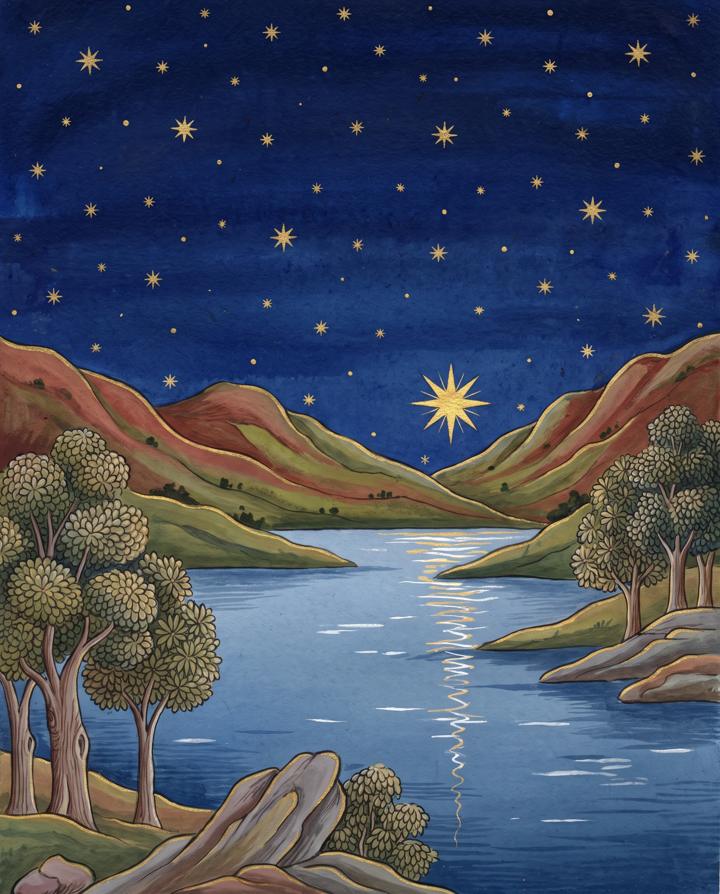
Tonight, look at the sky, or picture it if you cannot see it. Find the faintest star you can, then the brightest. Spend a few minutes letting the range between them stand for how far understanding can grow beyond where yours is now.
A question to sit with
Where does your knowing reach its edge?
Key ideas
īśvara (the Lord)