IV. Kaivalya Pāda · Leaning toward freedom (4.25–4.28)
4.27 · In the Gaps
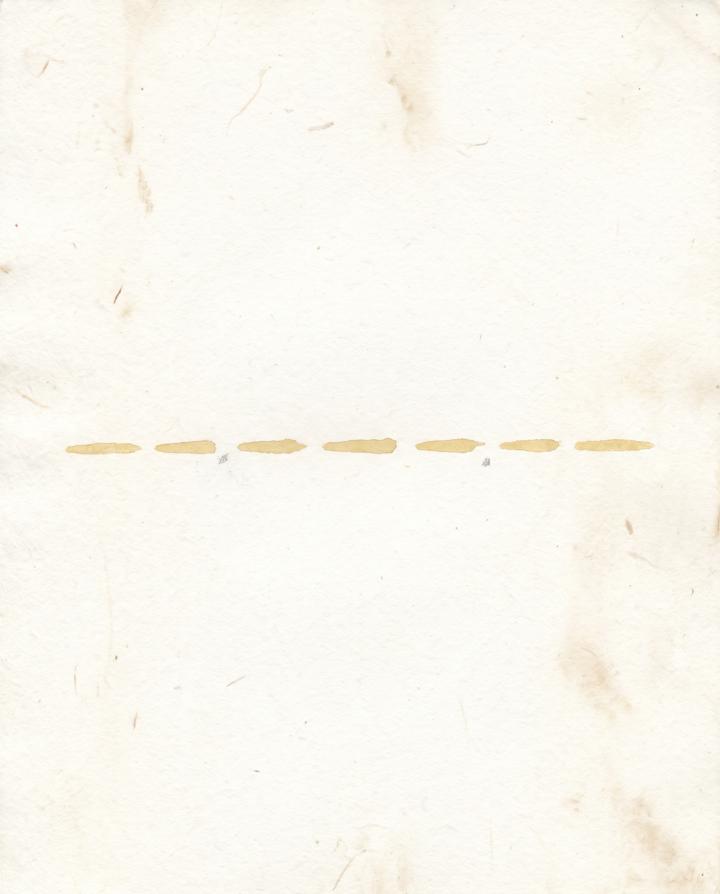
In the gaps, other thoughts arise from impressions.
Word by word
- tat-chidreṣu
- in its gaps
- pratyaya-antarāṇi
- other thoughts
- saṃskārebhyaḥ
- from impressions
Where it fits
Even the discerning mind of 4.26 has gaps, and in them other thoughts arise: 'I am', 'mine', 'I know', 'I do not know'. Vyāsa traces them to earlier impressions whose seeds are dwindling. How these leftovers are removed is the question 4.28 answers.
Reading
Even a mind that leans toward liberation has gaps, and old thoughts arise in them. Vyāsa names them: 'I am', 'mine', 'I know', 'I do not know'. They come from earlier impressions, from seeds that are dwindling. This is a kind sūtra. Old patterns flickering up do not mean practice has failed. They are what is left over, and the next sūtra says how they are met.
Vyāsa
“A mind that bends toward telling thought [from the self] … still has, in its gaps, other thoughts: 'I am', or 'mine', or 'I know', or 'I do not know'. Where do they come from? From earlier latent impressions, whose seeds are dwindling.”
Vyāsa's Yoga-bhāṣya, the oldest commentary. New translation from the Sanskrit, with reference to Woods (1914), p. 339.
Practice
During a quiet task today, notice when 'I' or 'mine' slips into the gaps: my idea, my turn, I'm doing well. Don't push it out. Note it once, kindly, and go back to the task.
A question to sit with
What slips into the gaps when you stop paying attention?
Key ideas
saṃskāra (latent impressions), viveka (discernment), citta (the mind-field)