III. Vibhūti Pāda · Powers of body and breath (3.38–3.43)
3.41 · The Ear of Space
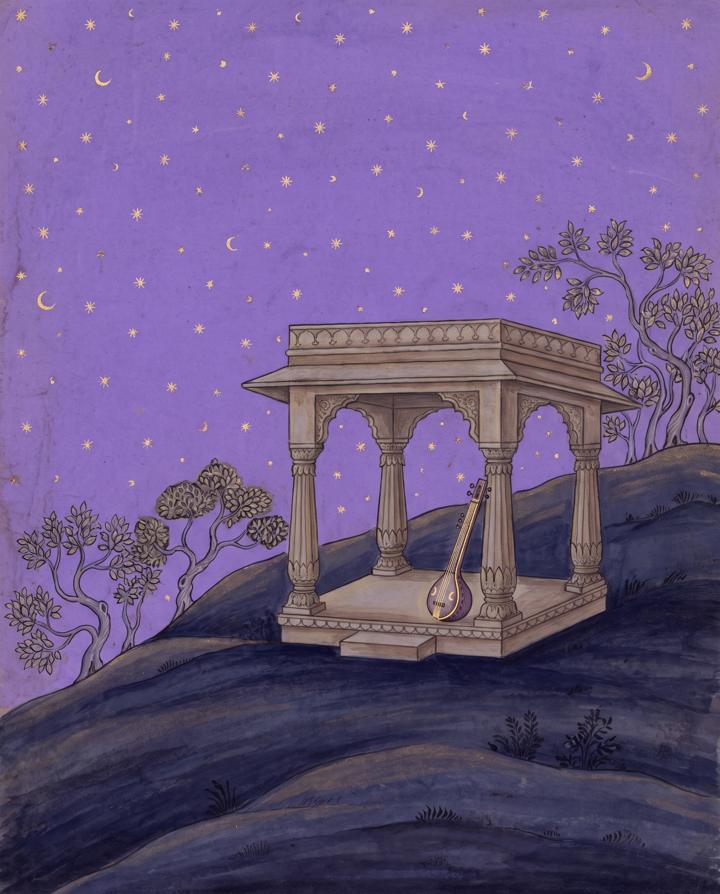
Saṃyama on the relation of hearing and space gives divine hearing.
Word by word
- śrotra
- hearing, the ear
- ākāśayoḥ
- and space (of the two)
- saṃbandha
- relation
- saṃyamāt
- from saṃyama
- divyam
- divine
- śrotram
- hearing
Where it fits
Saṃyama now falls on a relation: between hearing and space (ākāśa), the element whose quality is sound. Vyāsa makes space the ground of every ear and every sound (p. 268). The result is divine hearing, the gift 3.36 listed and 3.37 called an obstacle in absorption.
Reading
In Indian thought ākāśa, space or ether, is the element whose quality is sound. Vyāsa says it is the ground of every ear and every sound. We know hearing exists, he adds, because one person hears and a deaf person does not. Saṃyama on the relation between hearing and space, Patañjali says, gives divine hearing. Woods translates ākāśa as 'air'; most translators now prefer 'space'. One way to hear it today: every sound arrives in silence.
Vyāsa
“The sense of hearing is inferred from the grasping of sound: of a deaf man and one who is not deaf, one grasps sound and the other does not. … For a yogi who has made saṃyama on the relation between hearing and space, divine hearing begins.”
Vyāsa's Yoga-bhāṣya, the oldest commentary. New translation from the Sanskrit, with reference to Woods (1914), p. 269.
Practice
Sit by an open window or outdoors for five minutes. Listen first to the farthest sound you can hear, then to the nearest. Then listen to the quiet space in which all of them arise and fade.
A question to sit with
What do you hear when you listen to the space around sounds?